Overview
Timeline: Jan 2018 – Sep 2018
Department: Informatics
Funding: National Science Foundation
Supervision: Professor Gloria Mark
As an undergraduate research assistant for the study titled, “Managing Stress in the Workplace: Unobtrusive Monitoring and Adaptive Interventions”, conducted through the Donald Bren School of ICS at UC Irvine I have accumulated over 300 hours of research experience. The goal of this study was to analyze how stress impacts the quality of an email response. Students are given a primary cognitive task within a high stress or low stress environment. As they work on their task they were given either one batch of emails to respond to or several emails as they arrive in their inbox. Their stress levels were determined based on physiological measurements gathered throughout the study which include a keyboard and mouse equipped with pressure sensors, a thermal camera, bioharness, and an E4 smartwatch. These stress measurements are then compared and analyzed against an initial baseline stress level and other phases of the experiment which reflect varying degrees of stress.

My Role
As an experimenter my task was to run the experiment from start to finish. Firstly, I made sure each participant was equipped with a bio-harness and an E4 smartwatch that could collect physiological data from the participant such as their heart rate. In order to ensure the data was being properly collected, I analyzed the incoming data files before proceeding.
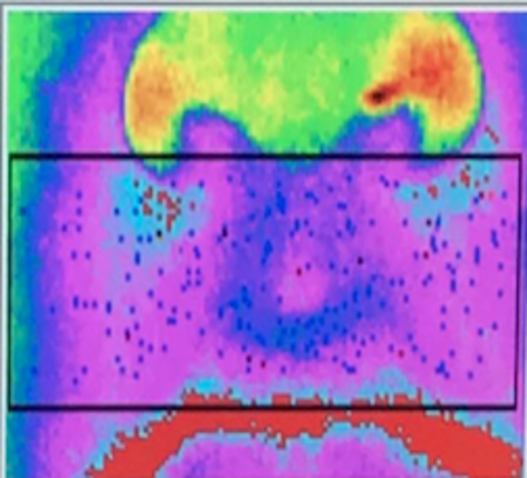
For collecting their breathing rate, I would follow the protocol provided by linking up interfaces with a thermal camera. This thermal camera detected the surface temperature of the participants face throughout the study and would later be used to help in interpreting the participants physiological data as measurements of stress.
Throughout the 90 minute experiment, I monitored the incoming flow of data in real-time through the biofeedback and supervised the thermal cameras detection of the nose region. Among other tasks, I troubleshooted the interfaces when they would crash, downloaded software to enhance our thermal tracking capabilities, and was the primary organizer in the recruitment process. My engagement in this study allowed for a hands-on multifaceted experience in which i was able to participate in discussions on what the data was reflecting and on how it was being interpreted.


Tools
E4 Smartwatch: serves as a supplement to the heart rate BioHarness. Gathers pulse rate to compare against heart rate.
Bioharness: wrapped around participants chest to track heart rate.
Rigged Sensored Mouse: detects hand pressure and mouse movements.
Rigged Sensored Keyboard: detects typing pressure and speed.
Hypothesis
The hypothesis that the team has predicted to arrive at for this study is whether batching emails help alleviate stress as opposed to receiving emails as they arrive. Another hypothesized component is whether participants will perform better with batching emails while working on a primary task, this could potentially be reflected through more word variation in their email responses. Essentially, the key differences here can be bottled down between mono-tasking and multi-tasking and whether email arrivals contribute to differences in performance. Furthermore, such experiment can lead to a variety of conclusions on how people perform office work, multitask, or what types of stress variables impact performance.